
Why Paint Prep Matters: The Work That Decides How Long Your Paint Lasts
· By Charles Perestrelo
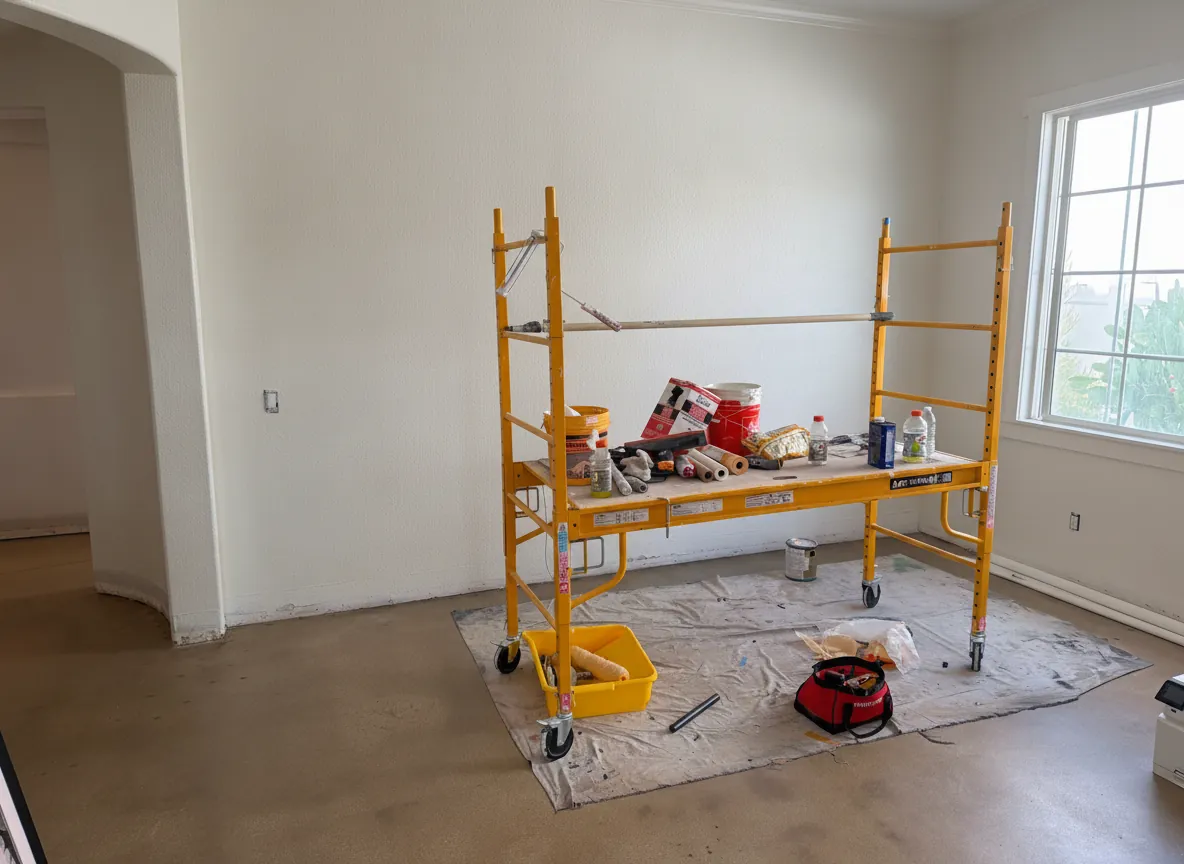
Ask any painter who has been on the job for a while what separates a coat that lasts ten years from one peeling in two, and almost none of them will name the brand of paint. They will point at the surface underneath it. Prep is the unglamorous part nobody photographs, but it is where a good paint job is actually made. Paint is only as good as what it grips, and if it grips loose chalk, greasy walls, or damp bare wood, it lets go early no matter how much you spent on the finish.
At Verdan Painting, owner Charles Perestrelo works across Orange County and South LA County, from inland tract homes to coastal properties in San Clemente and beyond. The pattern is consistent: the failures we get called to fix are prep failures, not paint failures. This guide walks through what real preparation looks like inside and outside a home, what you can do to make the job go faster, and the warning signs that a crew is racing past the part that matters most.
Prep Decides How Long the Paint Lasts
Paint bonds through a mechanical and chemical grip on a clean, sound, slightly textured surface. When that surface is contaminated or unstable, the bond is compromised before the first coat even dries. Dust and oils act like a release layer. Glossy, unsanded surfaces give the paint nothing to hold. Cracks and gaps let moisture travel behind the film, and moisture is what lifts paint off a wall.
This is why two homes painted with the identical product can age so differently. The one that was washed, sanded, patched, caulked, and primed keeps its finish tight for years. The one that got a quick coat over a dirty surface starts showing peeling, flaking, and blistering long before it should. The paint did not fail. The surface it was asked to stick to did. Prep is the difference between paying once and paying twice.
Interior Prep, Step by Step
Inside a home, prep is about creating a smooth, clean, sealed surface and protecting everything you are not painting. It starts with patching. Nail holes, dents, and old anchor holes get filled with spackle or joint compound, then sanded flush once dry. Larger cracks or drywall damage may need mesh tape and multiple passes so the repair disappears instead of telegraphing through the new paint.
Next comes sanding and caulking. Sanding knocks down old brush ridges, roller stipple, and glossy trim so the new coat can bite. Caulk fills the gaps where trim meets wall, where baseboards meet the floor line, and around door and window casings, giving you those crisp, shadow-free lines that read as professional. Bare patches, stains, and raw wood then get primed so they seal properly and do not flash or bleed through the topcoat.
Protection is prep too, and it is not optional. Floors get covered, furniture gets moved to the center and draped, and hardware, outlets, and fixtures get masked or removed. A crew that tapes and covers carefully is telling you they respect your home. A crew that skips it usually cuts the same corners on the walls.
Exterior Prep, Step by Step
Outside, the surface fights sun, wind, moisture, and time, so prep has to be more aggressive. It begins with a thorough wash, often with a pressure washer, to strip off dirt, cobwebs, mildew, and the powdery chalk that old paint sheds as it breaks down. Painting over chalk is one of the most common reasons a fresh exterior coat peels within a year. The chalk has to come off first.
After the surface dries, comes scraping and sanding. Any loose, flaking, or blistered paint gets scraped back to a sound edge, and those edges are feathered smooth so they will not show through the new coat. Cracks in stucco, gaps in wood siding, and open joints around windows and trim get repaired with the right filler or exterior caulk so water cannot get behind the paint.
Finally, every bare spot gets spot primed. Raw wood, exposed stucco, and rusty metal each need a primer suited to them, because bare material soaks up or rejects paint unevenly and rust will bleed through if it is not sealed. Only after washing, scraping, repairing, and priming does the finish coat go on. Skip any of those and the clock on the next repaint starts immediately.
Coastal Orange County Needs Extra Prep
Homes near the water in Orange County face conditions inland homes do not. Salt-laden air settles on siding, trim, and stucco, and salt is corrosive. It eats at metal, degrades old paint faster, and leaves a film that new paint will not stick to reliably. Coastal humidity and marine layer moisture also feed mildew and slow drying times, which changes how and when a surface can be coated.
For homes in San Clemente, Dana Point, and other coastal pockets, that means the washing stage carries more weight. Surfaces need a genuine cleaning to lift salt and chalk, not just a rinse. Metal fixtures and railings often need rust treatment and the right primer to survive the environment. Choosing coatings rated for coastal exposure matters, but even the best coating fails if it is laid over a salty, chalky surface. The prep is what lets the product do its job by the ocean.
What Homeowners Can Do to Prepare
You do not have to prep the surfaces yourself, but a few things on your end make the job smoother, faster, and often cleaner. Inside, clear the rooms as much as you can. Take down wall art, curtains, and anything on shelves, and move fragile or valuable items to another room. The less the crew has to work around, the more careful and efficient the work is.
Point out the problem areas before work starts. If you have a stain that keeps coming back, a spot that feels damp, a crack that reopens every year, or trim that never seems to hold paint, mention it. Those are clues to an underlying issue that prep should address, and catching them early beats discovering them under fresh paint. Outside, trim back shrubs and vines touching the house, move patio furniture and grills away from the walls, and make sure the crew can reach water and power. None of this is required, but it removes friction from the day.
How to Tell a Painter Is Skipping Prep
The tell is almost always in the timeline and the mess, or lack of preparation, before any color goes up. If a crew shows up and starts rolling paint within an hour with no washing, no sanding, and no patching, that is a red flag. Real prep on a full exterior or a lived-in interior takes real time, sometimes as long as the painting itself.
Watch for these signs. No pressure washing before an exterior repaint. Painting over visibly cracked, peeling, or chalky surfaces without scraping. No caulking of gaps and trim lines. Skipping primer on bare wood, stains, or patched areas. Little to no floor covering or masking of fixtures and hardware. Filler that is painted over before it is sanded flush, leaving lumps and ridges. A quote that comes in dramatically lower than everyone else usually means the savings are coming out of the prep, and that is exactly where you do not want them cut. Charles handles Verdan Painting jobs personally, so the prep gets the same attention as the finish. You can reach the shop at (949) 774-8496 to talk through what your project needs.
Frequently asked questions
- How much of a paint job is actually prep work?
- On many projects, prep takes as much time as the painting itself, and sometimes more. On a weathered exterior or a lived-in interior with repairs, patching, sanding, caulking, washing, and priming can be the bulk of the labor. That work is not padding. It is what makes the finish coat last.
- Can I just paint over old peeling paint?
- No. New paint applied over loose or peeling paint bonds to the failing layer, not to the sound surface underneath, so it comes off with it. Loose paint has to be scraped back to a solid edge, feathered smooth, and primed before recoating. Skipping that step almost guarantees early failure.
- Why does exterior paint peel so fast near the coast in Orange County?
- Salt air and marine moisture are hard on coatings. Salt corrodes metal and leaves a film that keeps new paint from sticking, and old paint chalks faster in that environment. Coastal homes need thorough washing to remove salt and chalk, rust treatment on metal, and coatings suited to the exposure.
- Do I need to prime before painting?
- Not everywhere, but bare wood, patched areas, stains, rust, and drastic color changes almost always need primer. Primer seals porous or stained surfaces, blocks bleed-through, and gives the topcoat a consistent surface to grip. Painting a bare or stained spot without primer often leads to blotchy color and early wear.
Related services
Ready for an exact price?
Get a free, no-pressure in-home estimate. Real numbers for your home, not a phone guess.