
Faux Wood-Grain Door Finishes: Turn a Metal or Fiberglass Door Into Real-Looking Hardwood
· By Charles Perestrelo
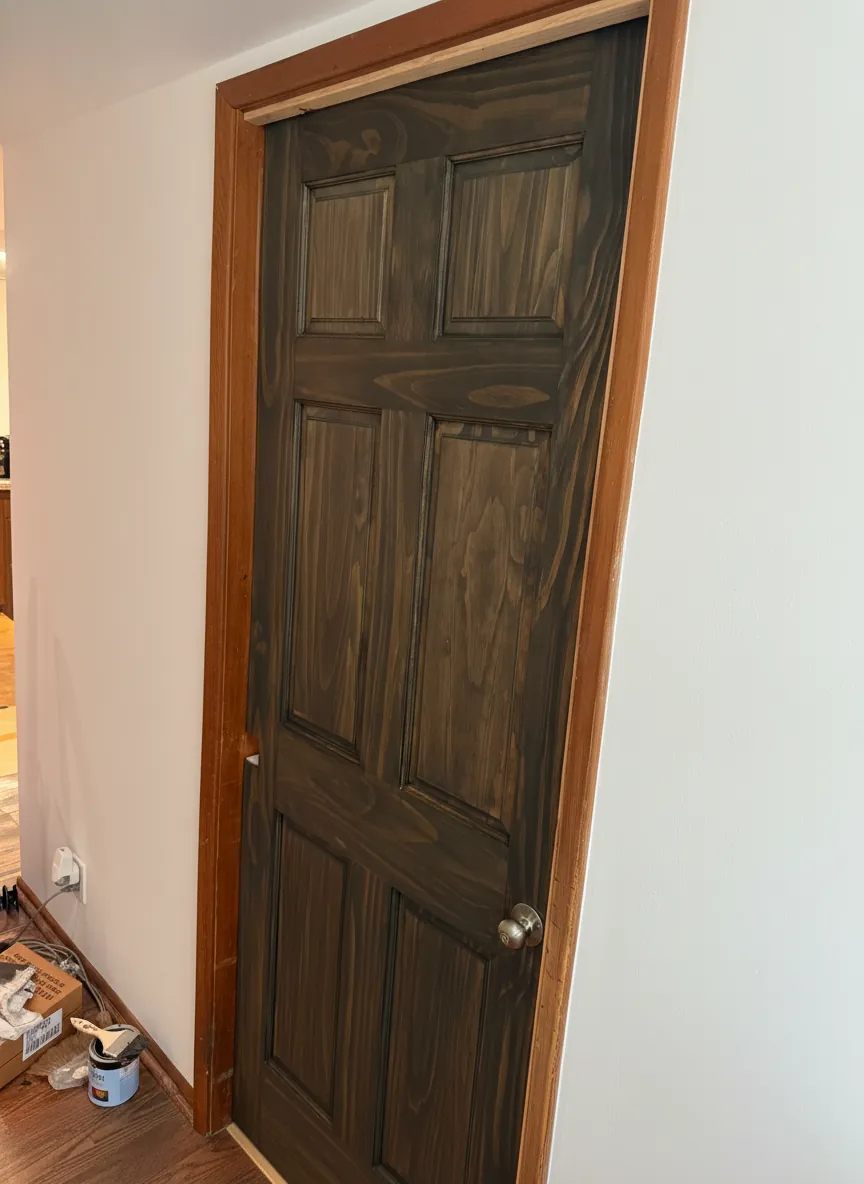
Your front door is the first thing guests, buyers, and delivery drivers see, and a plain white or beige metal slab tells them very little. A solid wood door in mahogany or walnut says something else entirely, but the price tag on real hardwood entry doors stops most homeowners cold. There is a third option that most people never hear about: keep the door you already have and give it the grain, depth, and warmth of stained wood by hand.
That craft is called a faux wood-grain finish, and it is the signature work at Verdan Painting. Charles Perestrelo, the owner, has built a specialty out of transforming metal and fiberglass doors across Orange County into surfaces that read as real stained hardwood from arm's length and closer. This guide walks through what the finish is, why so many homeowners choose it over replacement, how the layered process actually works, and what it takes to keep it looking rich under the coastal sun.
What a faux wood-grain finish actually is
A faux wood-grain finish is a decorative painting technique that mimics the color, grain pattern, and depth of real wood on a surface that is not wood at all. Instead of solid color, the finisher builds several translucent layers of gel stain and glaze, then draws grain into those layers by hand before they set. The result has the same directional flow, subtle color variation, and light-catching depth you see in a stained oak, mahogany, or walnut door.
The trick is that it is not a decal, a wrap, or a printed film. It is a painted finish applied and worked in place, which means it follows the shape of your door, wraps around panels and beveled edges, and does not peel at a seam. Done well, people run a hand across it expecting texture and are surprised to feel a smooth, sealed surface that simply looks like wood.
Why homeowners choose it over a new wood door
The math is the main reason. A quality solid-wood or wood-veneer entry door, once you add the slab, hardware, weatherstripping, and installation, commonly runs into the low thousands of dollars, and true custom hardwood units run higher (figures vary by size, species, and installer, so treat any number as a market range rather than a quote). Refinishing the door you already own into a faux wood-grain look sits at a fraction of that, because there is no demolition, no reframing, and no new slab.
There is a practical reason too. A lot of Orange County homes already have a perfectly solid steel or fiberglass door that seals well and locks well, but looks flat and dated. Ripping out a functional, energy-efficient door to chase a wood look is wasteful. A faux finish keeps the security, insulation, and fit you paid for and changes only what you see. It is also faster, since most doors can be transformed in place over a short window rather than waiting weeks for a custom door to arrive.
How the layered gel-stain and glaze technique works
The finish is built in stages, and each stage matters. First comes prep, which is where most DIY attempts fall apart. The door is cleaned, degreased, lightly scuffed, and primed with a bonding primer chosen for the substrate, because steel and fiberglass do not accept coatings the same way. A base coat goes on next in a tone that mimics the lightest part of the wood, since wood is never one flat color.
Then the grain work begins. Gel stain and glaze are applied over the base and, while still workable, are pulled and dragged with graining tools, brushes, and combs to create the streaks, arcs, and pores of real timber. Panels, rails, and stiles are grained in different directions the way a real wood door would be assembled, which is a detail cheap versions skip. Additional glaze layers add darker undertones and shadow so the finish has depth instead of looking like a single printed pattern.
The final and most important step for longevity is the topcoat. A clear protective coat, often with UV resistance, seals everything and gives the door its sheen, whether you want a soft satin or a deeper gloss. That topcoat is what stands between your hand-built grain and the weather.
Which doors it works on: entry doors and garage doors
Entry doors are the most popular candidate, especially steel and fiberglass front doors, because they carry the most visual weight on a home's exterior and benefit most from the upgrade. Double doors, sidelights, and doors with decorative glass all take the finish well, and the grain can be matched across the whole entry set so it reads as one unit.
Garage doors are the other big win, and they change a home's whole face. A steel roll-up door painted to look like a carriage-house wood door can make a tract home look custom, particularly on the Spanish, Craftsman, and coastal-contemporary styles common around Orange County. Because a garage door is a large flat plane, consistent grain direction and color across every section is what separates a convincing job from an obvious one. The same approach extends to fiberglass patio doors, gates, and even interior doors when a homeowner wants a matched look throughout.
Durability and the coastal sun factor
Orange County finishes fight two things: strong sun and salt air. South-facing and west-facing doors take direct UV for hours a day, and closer to the coast in areas like San Clemente and Newport Beach, marine air adds moisture and salt that punish a weak coating. A faux wood-grain finish holds up to that when it is built for it, which means UV-resistant products and a proper sealing topcoat, not a hardware-store clear coat that ambers and chalks in a couple of seasons.
Realistically, an exterior faux finish on a sun-blasted door will eventually need a refresh of its protective topcoat, the same way a real wood door needs periodic re-sealing. The difference is that maintaining a faux finish usually means recoating the clear layer rather than stripping and re-staining bare wood. Doors that are shaded or covered by a porch will go longer between refreshes than a door baking in full afternoon sun.
How to maintain the finish
Day-to-day care is simple. Wipe the door with a soft, damp cloth and a mild cleaner to lift dust, pollen, and salt residue, and skip abrasive pads or harsh solvents that can cut into the topcoat. A quick clean a few times a year keeps the finish looking fresh and gives you a chance to spot any early wear near the handle or lock, which is where hands and keys do the most damage.
When the topcoat starts to look dull or thin on a sun-exposed door, that is the signal to refresh the clear coat rather than wait for the grain layers underneath to be exposed. Catching it early keeps the maintenance small. A finisher who did the original work can usually scuff and recoat the protective layer and bring back the depth without redoing the grain, which is one more reason the finish is more forgiving over time than people expect.
Why it takes a skilled hand
Faux wood-grain is one of those crafts where the gap between amateur and professional is obvious the moment you see them side by side. Grain that runs the wrong way across a panel, color that sits flat with no undertone, glaze that dried before it was worked, or a topcoat that clouds over: any one of those tells the eye instantly that the door is painted, not wood. Convincing work depends on timing, color layering, correct grain direction per panel, and knowing the right products for steel versus fiberglass.
This is why the finish is treated as a specialty rather than a standard paint job. Verdan Painting is owner-operated by Charles Perestrelo out of San Clemente, serving all of Orange County and into South Los Angeles County, and faux wood-grain door finishing is a core part of that craft-focused work alongside interior and exterior painting, cabinet and wood refinishing, decorative finishes, pressure washing, and color consulting. If you have a metal or fiberglass door you wish looked like hardwood, a hand-built faux finish is often the smartest way to get there. Call Verdan Painting at (949) 774-8496 to talk through your door.
Frequently asked questions
- How long does a faux wood-grain door finish last?
- With UV-resistant products and a proper sealing topcoat, an exterior finish holds its look for years before it needs attention. Sun exposure is the biggest factor: a door facing direct afternoon sun near the coast will need its clear topcoat refreshed sooner than a shaded or porch-covered door. Maintaining it usually means recoating the protective layer, not redoing the grain.
- Can you make a metal or fiberglass door look like real wood?
- Yes. That is exactly what the faux wood-grain technique does. Layers of gel stain and glaze are applied over a bonding primer and base coat, then the grain is drawn in by hand before the layers set, and a clear protective topcoat seals it. On both steel and fiberglass, the finished door reads as stained hardwood from close range.
- Is a faux finish cheaper than buying a new wood door?
- Almost always. A quality wood or wood-veneer entry door with hardware and installation commonly runs into the low thousands of dollars (ranges vary by size, species, and installer), while refinishing the door you already own costs a fraction of that because there is no new slab, demolition, or reframing. You also keep the security, insulation, and fit of your existing door.
- Does the finish work on garage doors?
- Yes, garage doors are one of the most dramatic applications. A steel roll-up door can be finished to look like a carriage-house wood door, which changes the whole face of a home. Because a garage door is a large flat plane, consistent grain direction and color across every section is what makes it convincing, so it is best left to an experienced finisher.
Related services
Ready for an exact price?
Get a free, no-pressure in-home estimate. Real numbers for your home, not a phone guess.